
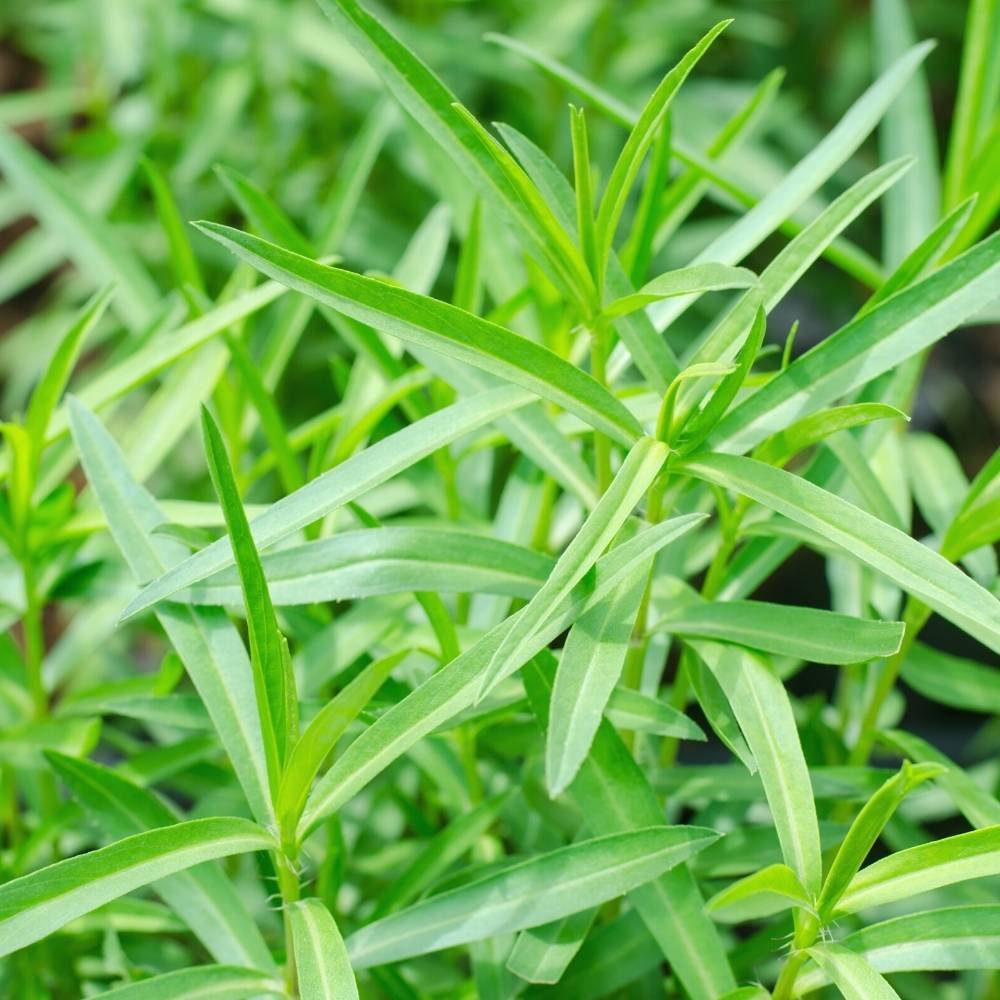
Tarragon is a cold-hardy perennial herb plant that is not very attractive but has many benefits and is popular for its fragrant leaves. The leaves are long, glossy, and green, and the flowers are small, green and yellow, and edible. The leaves add flavor to dishes and are also used raw. Tarragon is very easy to grow because it is very tasty, drought-resistant, and hardy so overall you can plant it without special requirements.
Buy the Best Quality Tarragon Imported Seeds Online at the best price in India from www.organicbazar.net with a good germination rate.
About this item
Number of Tarragon Seeds: 500 Seeds
Where to grow: Balcony or terrace garden
Sowing season: Winter Season
Sowing method: Directly or Seedling
Seeds Sowing depth – 0.5cm
Germination temperature: 15-26°C
Germination Time: 7 to 14 days from sowing
Harvest: 60-90 days from planting
What size grow bag is best for Tarragon?
12 x 12 (W*H)
15 x 15 (W*H)
24 X 9 (W*H)
Tarragon Growing Season In India
In India, tarragon is best grown during the cooler months, typically from late September to early November and then again from late January to early February.
How To Grow Tarragon In Pots7
You can sow Tarragon seeds in any container or grow them by transplant method; it grows well in both ways. To plant tarragon from seeds, select a pot or grow bag 30-60 cm wide and 22-36 cm deep with well-draining holes. The optimum temperature for germination of tarragon seeds is 15-26°C.
Tarragon Seeds Sowing Method
Take a pot or grow bag, fill them with soil and add organic fertilizer then sprinkle tarragon seeds over the soil, and cover the seeds with a thin layer of soil. Water the soil deeply through a watering can, and place the pot in an area with low light or indirect sunlight. Tarragon seeds germinate in about 7 to 14 days, they may germinate early or late depending on the growing conditions. If you have grown tarragon in a seedling tray, you will need to transplant them into big pots when seedlings are about 15-20 cm tall. After transplanting give proper water to the plant and keep the soil moist.
Fertilizer For Tarragon Plants
Since tarragon is a low-maintenance plant that grows very well in low-nutrient soils, it does not require any fertilizer.
Tarragon Plants Care
Soil – Use well-draining, sandy, and light soil for planting tarragon. It is a drought-resistant herb, so it hates wet conditions and performs best in soils with low nutrients. Remember that tarragon should not be planted in acidic, rich, and moist soil.Water – Tarragon needs watering only when the soil is dry because too much water can cause fungal diseases and root rot in the plants. Before watering, check whether the top layer of soil is dry or not, if it is dry then give water otherwise watering is not needed. Sunlight – Tarragon grows best in full sun to partial sun but avoid giving the tarragon plant too much sunlight during hot climates or you can provide the plant with shade in hot temperatures.Temperature – Tarragon is a hardy perennial herb that can easily tolerate cold weather but it does not like too much heat and sunlight and will not grow well in high humidity. The temperatures between 12-26°C are optimum for growing tarragon. Common pests and diseases – Aphids, slugs, and snails attack the tarragon plant. Some diseases that destroy tarragon plant growth are powdery mildew, downy mildew, and root rot, caused by fungi in wet soil conditions. Remove or cut off infected leaves and stems and use neem oil to kill insects.Pruning – To encourage the growth of new stems and leaves and enhance the flavor of tarragon, it is very important to cut off dry and infected leaves and stems. If any flowers begin to appear, pinch or cut them off to prevent the plant from losing its flavor.Mulching – Mulching is a good option to protect the tarragon plant from the cold climate, for mulching add 5-8 cm of dry leaves, straw, grass, etc. on the soil. You can also keep your tarragon pots indoors in winter.
Harvesting Of Tarragon
Tarragon becomes ready for harvesting within 2-3 months of planting. However, you can harvest the leaves when the tarragon plant is large enough to use.
You can cut the leaves with a scissor as needed.
Regular harvesting will encourage more leaves.
Cut off the young and top leaves before the plant flowers for delicious flavor.
Tarragon Special Features
Common name – Tarragon, Estragon, Dragon herb and Dragon wort
Scientific name – Artemisia dracunculus
Height – 60-150 cm
Companion planting – Oregano, Marjoram, Lavender, Dill, Sage, and Rosemary
Level of growing – Easy
FAQ
Does Tarragon come back?
Tarragon is a perennial plant so it will come back every year.
Does tarragon need a lot of sunlight?
Tarragon is the only herb plant that doesn’t require a lot of sunlight, even in hot climates it doesn’t grow well in direct sunlight.
Why is my tarragon dying?
Root rot is a fungal disease that thrives in wet soil conditions that causes tarragon plants to wither and then die.
How cold can tarragon tolerate?
As tarragon is a cold-hardy plant that can tolerate temperatures up to -30°C.
Why is my tarragon going brown?
Tarragon plant turns brown when planted in poorly drained soil, and other causes such as when the plant receives too much sunlight and improper watering.
Why are my tarragon leaves turning yellow?
In most cases, tarragon leaves turn yellow due to overwatering or underwatering. Note: Images are for reference purposes only. The actual product may vary in shape or appearance based on climate, age, height, etc.
Be the first to review “Tarragon Seeds (500 Seeds)” Cancel reply
Related products
-

Krishna/Shyam Basil Seeds – 200 Seeds (Tulsi/तुलसी के बीज)
₹122.00 Add to cart -
Thyme Seeds (Ajwain ke Phool/थाइम/अजवाइन के फूल के बीज)
₹149.00 Add to cart -
Chamomile German Seeds – 1000 Seeds (कैमोमाइल के बीज)
₹149.00 Add to cart -
Asparagus Seeds – 50 Seeds (Shatavari/शतावरी के बीज)
₹165.00 Add to cart

Reviews
There are no reviews yet.