
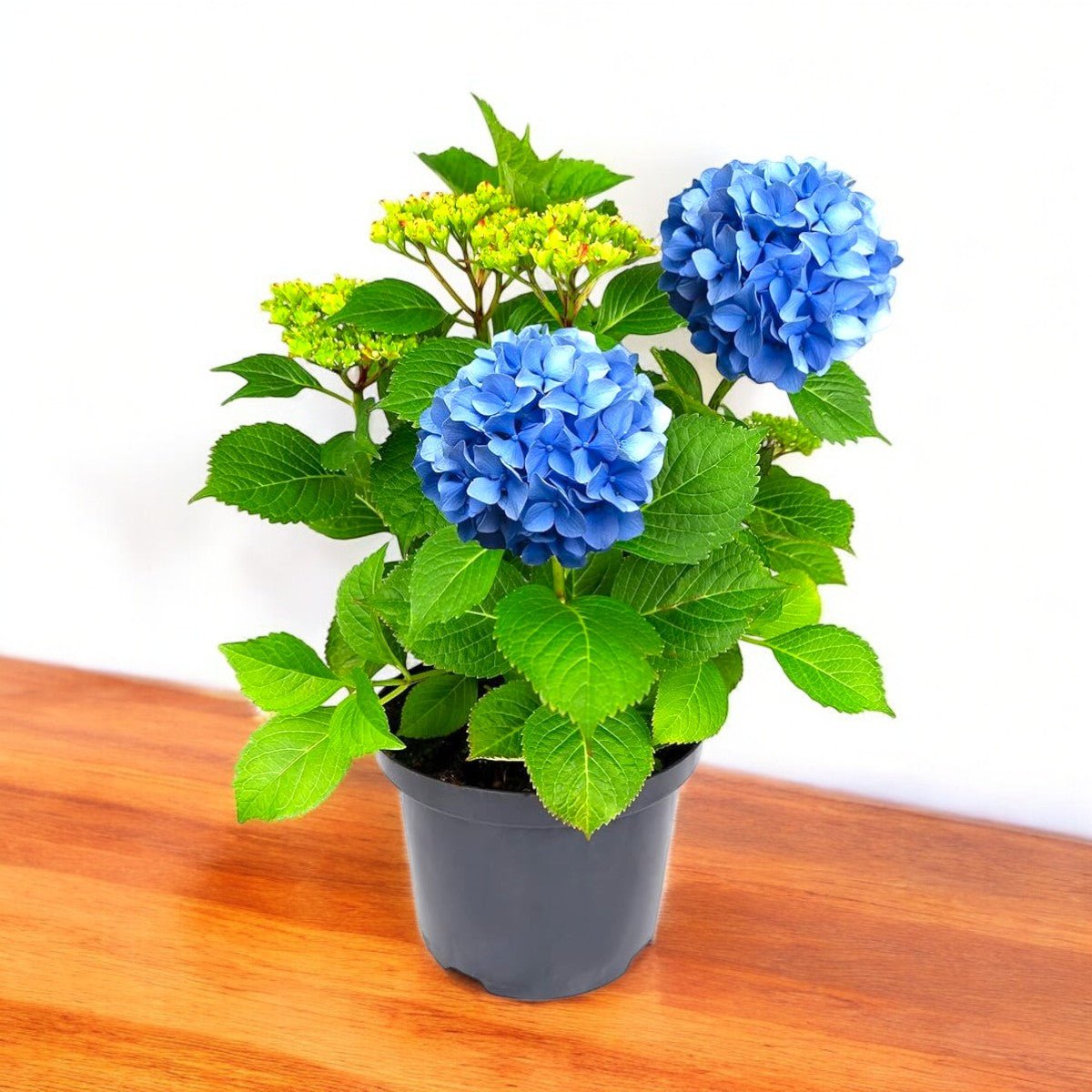
Hydrangea Plant (Blue) – Hybrid Variety
Basic Product Details
Scientific Name: Hydrangea macrophylla (Hybrid)
Common Names: Blue Hydrangea, Hybrid Hydrangea, Bigleaf Hydrangea
Plant Height: 12-18 inches (approximately)
Pot Size: 5-6 inch nursery pot
Plant Type: Perennial, Flowering Shrub, Hybrid Variety
Soil Type: Well-draining, acidic soil (pH 5.5-6.5) for blue blooms
Sunlight Requirement: Partial shade to full morning sunlight
Product Overview
The Blue Hydrangea Plant (Hybrid) is a stunning flowering shrub known for its large, vibrant blue blooms that bring an elegant charm to gardens and indoor spaces. This hybrid variety is cherished for its prolific flowering, long-lasting blooms, and adaptability to different climates. Perfect for borders, container gardening, and ornamental displays, the Blue Hydrangea adds a splash of color to any landscape while being relatively easy to maintain.
Features and Characteristics
Growth Habit
Compact and bushy growth, ideal for gardens and containers.
Reaches up to 3-5 feet in height and width when fully mature.
Leaves & Flowers
Lush, dark green foliage that provides a beautiful contrast to the vibrant blooms.
Produces large, spherical clusters of blue flowers, with color intensity influenced by soil pH.
Uses of Blue Hydrangea Plant
Ornamental Uses
Ideal for landscaping, garden borders, and flower beds.
Perfect for pots, patios, balconies, and terrace gardens.
Adds beauty to indoor spaces when placed in bright, well-lit areas.
Floral Arrangements
Popular choice for bouquets, centerpieces, and floral decorations.
Dried hydrangea flowers are used in crafts, wreaths, and arrangements.
Symbolic Uses
Symbolizes gratitude, grace, and beauty, often used in weddings and special occasions.
Care Tips for Blue Hydrangea Plant
Light
Requires morning sunlight and afternoon shade for healthy growth and vibrant blooms.
Watering
Water deeply 2-3 times a week, keeping the soil consistently moist but not soggy.
Increase watering during hot weather and reduce in winter.
Fertilizer
Feed with acidic fertilizers or hydrangea-specific fertilizers every 2-4 weeks during the growing season.
Add aluminum sulfate to the soil to maintain the blue color of blooms.
Pruning
Prune after the blooming season to remove dead flowers and encourage new growth.
Avoid heavy pruning in spring as it may reduce flower production.
Pest Control
Susceptible to aphids, spider mites, and powdery mildew.
Use neem oil spray or organic insecticides for pest control.
Benefits of Growing Blue Hydrangea Plant
Aesthetic Benefits
Enhances the beauty of gardens, patios, and indoor spaces with its vibrant blue blooms.
Provides a lush, green backdrop for other flowering plants.
Environmental Benefits
Attracts pollinators like bees and butterflies, promoting biodiversity.
Emotional Benefits
Known to have a calming effect, making it a popular choice for meditation spaces and relaxation corners.
Placement Suggestions
Suitable for garden borders, flower beds, and landscape focal points.
Thrives well in large containers on balconies, patios, and terraces.
Can be placed indoors near windows with ample indirect light for a decorative touch.
Common Questions and Answers About Blue Hydrangea Plant
How do I maintain the blue color of Hydrangea flowers?
To maintain the blue color, ensure the soil is acidic (pH 5.5-6.5) by adding aluminum sulfate or acidic fertilizers.
Can Blue Hydrangea grow in full sunlight?
It thrives best in morning sunlight with afternoon shade to prevent leaf burn and ensure healthy blooms.
How often should I water my Hydrangea?
Water 2-3 times a week, ensuring the soil remains moist but not waterlogged.
Can I grow Blue Hydrangea indoors?
Yes, it can be grown indoors in bright, indirect light with proper watering and humidity levels.
When is the best time to plant Hydrangea?
The best time to plant is during early spring or fall, when temperatures are mild.
Do Hydrangeas need pruning?
Prune after the blooming season to remove dead flowers and shape the plant. Avoid pruning in spring to prevent cutting off new blooms.
How do I prevent pests on my Hydrangea plant?
Use neem oil spray or organic insecticides to control common pests like aphids and spider mites.
Is the Blue Hydrangea a perennial plant?
Yes, it is a perennial shrub, blooming every year with proper care.
What type of soil is best for Blue Hydrangea?
Prefers well-draining, acidic soil rich in organic matter.
Add the Blue Hydrangea Plant (Hybrid) to your garden for a burst of vibrant color and timeless beauty. Order now and enjoy the enchanting charm of hydrangea blooms right at your home!
Be the first to review “Hydrangea Plant (Blue) – Hybrid Variety” Cancel reply
Related products
-

Thunbergia Mysorensis Plant – Mysore Trumpet Vine, Indian Clock Vine
₹449.00 Add to cart -

Hibiscus Yellow Double plant – Jaswand, Gudhal
₹399.00 Add to cart -
Passiflora Kermesina Plant (Pink) – Passion Flower, Krishna Kamal
₹459.00 Add to cart -
Desi Gulab Plant – Scented Desi Rose Plant in 5″ Inch Pot
₹399.00 Add to cart
Reviews
There are no reviews yet.