
Pink Ball Tree – Dombeya wallichii
Basic Product Details
Scientific Name: Dombeya wallichii
Common Names: Pink Ball Tree, Tropical Hydrangea, Pinkball, Wallich Dombeya
Plant Height: 1 feet, can grow up to 15-20 feet
Pot Size: 5-6 inch nursery pot (for young plants)
Plant Type: Perennial, Flowering Tree
Soil Type: Well-draining, loamy soil rich in organic matter
Sunlight Requirement: Full sunlight to partial shade
Product Overview
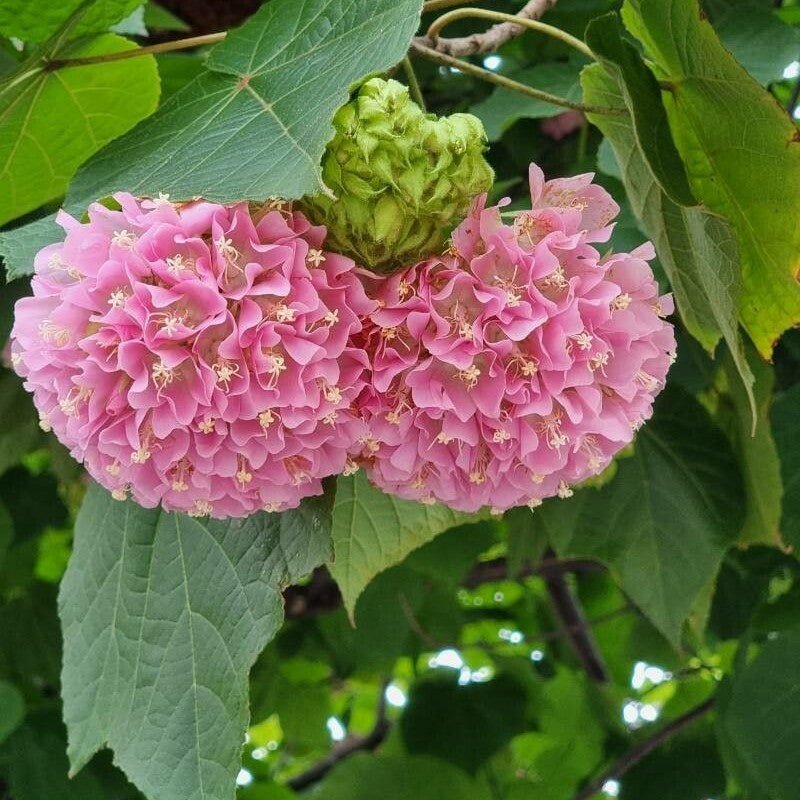
The Pink Ball Tree (Dombeya wallichii) is a stunning flowering tree known for its large, fragrant, pink blooms that resemble hydrangeas. Native to Madagascar, this fast-growing tree produces dense clusters of pink flowers that hang gracefully, attracting bees, butterflies, and hummingbirds. Its lush green foliage and spectacular floral display make it a perfect ornamental tree for gardens, parks, and landscapes.
Features and Characteristics
Growth Habit
Fast-growing deciduous tree that can reach 15-20 feet in height.
Forms a wide canopy with large, heart-shaped leaves.
Ideal for shade and ornamental purposes.
Leaves & Flowers
Broad, velvety green leaves with a slightly serrated edge.
Produces large, round clusters of soft pink flowers in winter and early spring.
Flowers have a sweet, honey-like fragrance.
Blooming Season
Blooms during late winter to early spring, providing seasonal color.
Flowers last for several weeks, creating a spectacular visual display.
Uses of Pink Ball Tree
Ornamental Uses
Used in gardens, parks, and landscapes as an eye-catching flowering tree.
Suitable for avenue planting, large gardens, and courtyards.
Can be grown as a standalone specimen tree or in clusters for a stunning effect.
Ecological Benefits
Attracts pollinators like bees, butterflies, and hummingbirds.
Provides shade and shelter for small birds and beneficial insects.
Care Tips
Light
Prefers full sunlight for optimal flowering but tolerates partial shade.
Watering
Water regularly during the growing season, keeping the soil moist but not waterlogged.
Reduce watering in winter once the plant is established.
Fertilizer
Apply balanced organic fertilizers (NPK 10-10-10) every 2 months.
Add compost or well-rotted manure for enhanced growth and flowering.
Pruning
Prune after the flowering season to maintain shape and encourage new growth.
Remove dead or weak branches to improve air circulation.
Pest & Disease Control
Generally pest-resistant, but occasional aphids or mealybugs may appear.
Use neem oil spray or mild insecticides if pests are observed.
Placement Suggestions
Ideal for large home gardens, parks, and commercial landscapes.
Can be planted in backyards, along driveways, or as a shade tree.
Suitable for tropical and subtropical climates with warm temperatures.
Common Questions and Answers About Pink Ball Tree
How fast does the Pink Ball Tree grow?
It is a fast-growing tree that can reach 15-20 feet in a few years under optimal conditions.
Does the Pink Ball Tree need full sun?
Yes, it thrives in full sunlight but can tolerate partial shade.
When does the Pink Ball Tree bloom?
It typically blooms in late winter to early spring, producing large pink flower clusters.
Can the Pink Ball Tree be grown in pots?
Yes, but it requires a large pot (at least 15-20 inches wide) and regular pruning to maintain size.
How do I care for the Pink Ball Tree in winter?
Water less frequently in winter.
Protect young plants from frost or extreme cold by covering them with mulch.
Is the Pink Ball Tree fragrant?
Yes, the flowers have a delightful honey-like fragrance that attracts pollinators.
Does the Pink Ball Tree attract bees and butterflies?
Yes, the nectar-rich flowers attract bees, butterflies, and hummingbirds.
The Pink Ball Tree (Dombeya wallichii) is a stunning flowering tree that adds beauty, fragrance, and ecological benefits to any landscape. Order now to bring spectacular pink blooms to your garden
Be the first to review “Pink Ball Tree – Dombeya wallichii” Cancel reply
Reviews
There are no reviews yet.